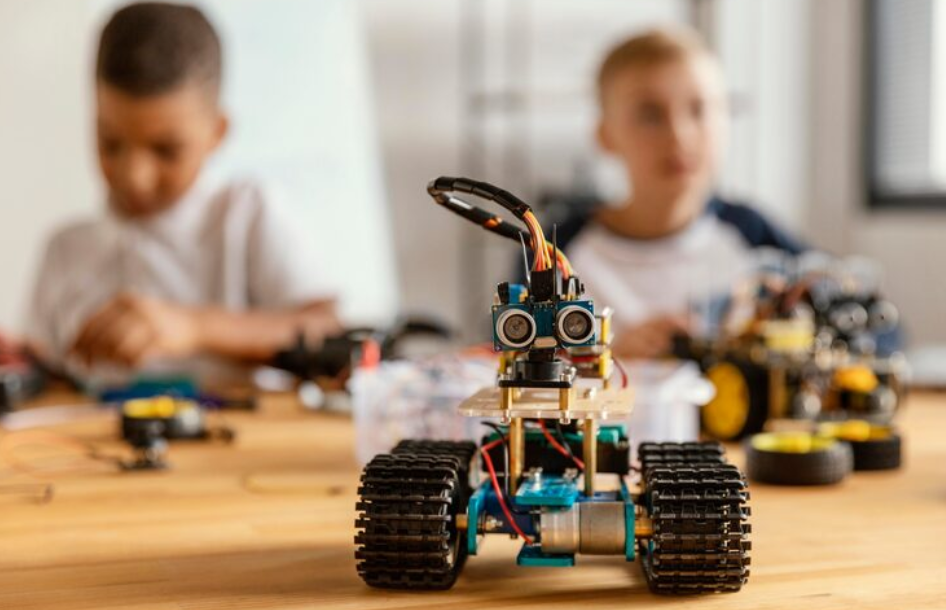
STEM education combines science, technology, engineering, and mathematics to help students understand how things work and how problems can be solved. While traditional classroom learning is important, practical activities can make these subjects easier and more enjoyable. The right robotic products can give students hands-on experience with technology while encouraging creativity, logical thinking, and teamwork. Robotics can turn theoretical lessons into practical projects that students can see and interact with.
Make STEM Learning More Interactive
Students often learn better when they can actively participate in a lesson. Robotic products allow learners to build, program, and operate different types of robotic systems. Instead of only reading about motors, sensors, coding, or automation, students can see how these components work together.
This hands-on experience can make difficult concepts easier to understand. Students can test their ideas and immediately observe the results. This makes learning more engaging and can help them remember important concepts for longer.
Robotic Products Encourage Problem-Solving
Problem-solving is an important part of STEM education. When students work with robotic products, they may face challenges during building, programming, or testing. A robot may not move correctly, a sensor may not respond as expected, or a program may contain an error.
These situations encourage students to identify the problem and find a suitable solution. They learn to test different approaches instead of giving up when something goes wrong. Over time, this process can improve logical thinking, patience, and confidence.
Develop Creativity and Innovation
Robotics also gives students the freedom to create their own projects. They can design robots that perform specific tasks or modify existing designs to improve their performance. Robotic products provide the tools students need to turn creative ideas into working models.
This type of learning encourages students to think differently. They can experiment with designs, explore new possibilities, and learn from their mistakes. Such activities can help develop an innovative mindset that is useful in many STEM-related fields.
Build Teamwork and Communication Skills
Robotics projects are often suitable for group activities. Students can work together to design, build, program, and test a project. Each person can take responsibility for a different part of the task while contributing to the overall goal.
This experience helps students learn how to communicate their ideas, listen to others, share responsibilities, and solve disagreements. These skills are valuable not only in education but also in future workplaces where teamwork is often required.
Connect Theory With Real-World Applications
Robotic products can help students understand how classroom knowledge is used in real situations. Concepts from mathematics, physics, computer science, and engineering can all be applied during robotics projects.
For example, students may use measurements to design a structure, coding to control movement, and basic engineering principles to improve stability. Seeing these subjects work together can give students a clearer understanding of their practical value.
Conclusion
The right robotic products can make STEM education more engaging, practical, and effective. They provide students with opportunities to experiment, solve problems, develop creative ideas, and work with others. By connecting classroom concepts with hands-on projects, robotics can help students build valuable skills and gain greater confidence in STEM subjects. This practical learning experience can also prepare them for future educational and career opportunities in technology and engineering.